
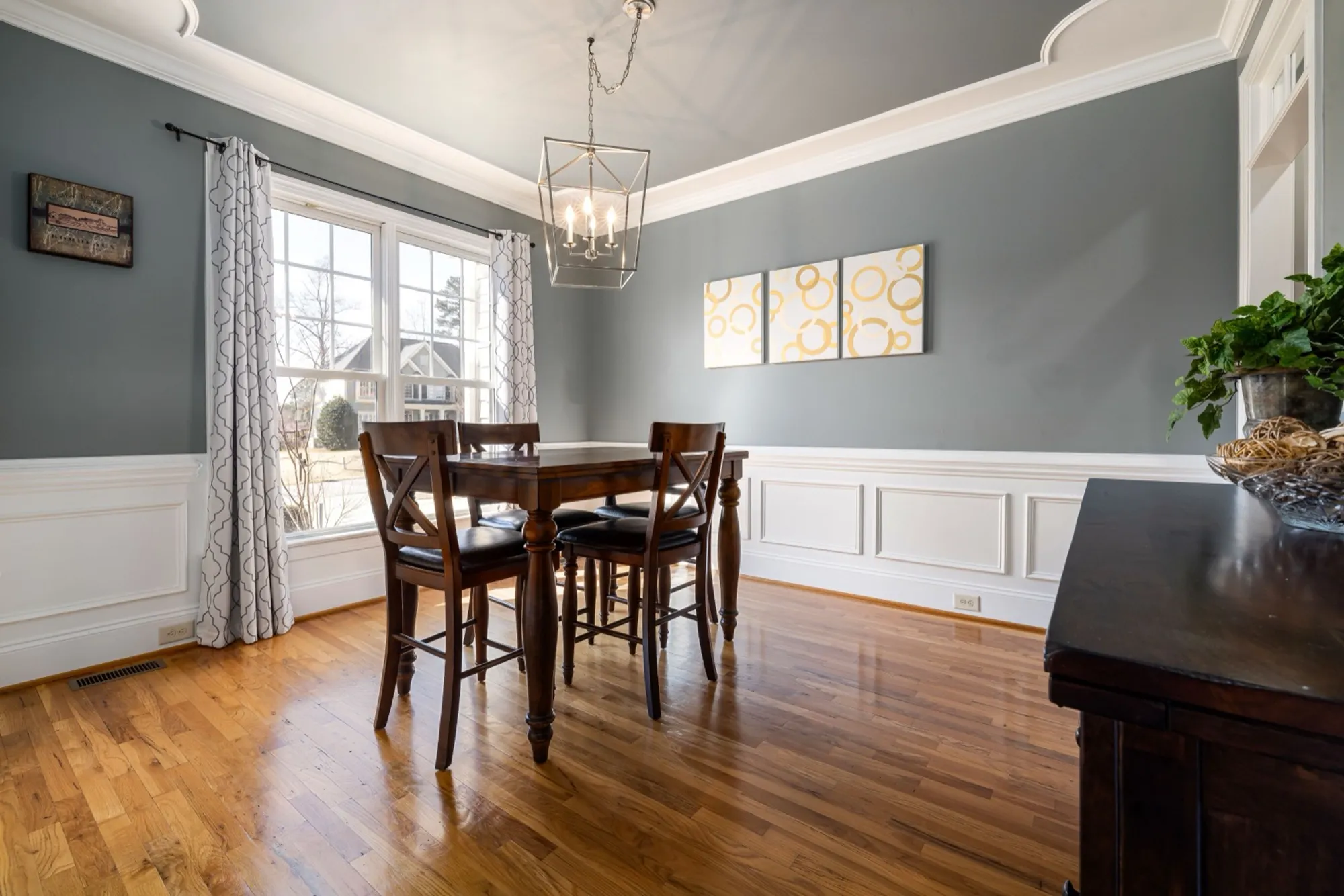
Wainscoting is one of the few details that changes how formal or relaxed a room feels without touching a single fixture. Panel profile, wall color, and where you use it all move together, and small changes to any one of them shift the whole room’s register.
A layered, traditional profile
This dining room uses a more layered panel arrangement: a smaller square panel stacked over a taller rectangular one, each outlined in its own moulding. That extra layer of detail is what reads as formal. Paired with a pale, muted wall color, it’s calm and traditional, the kind of room built for a long dinner rather than a quick meal.
A simpler profile, a bolder wall color
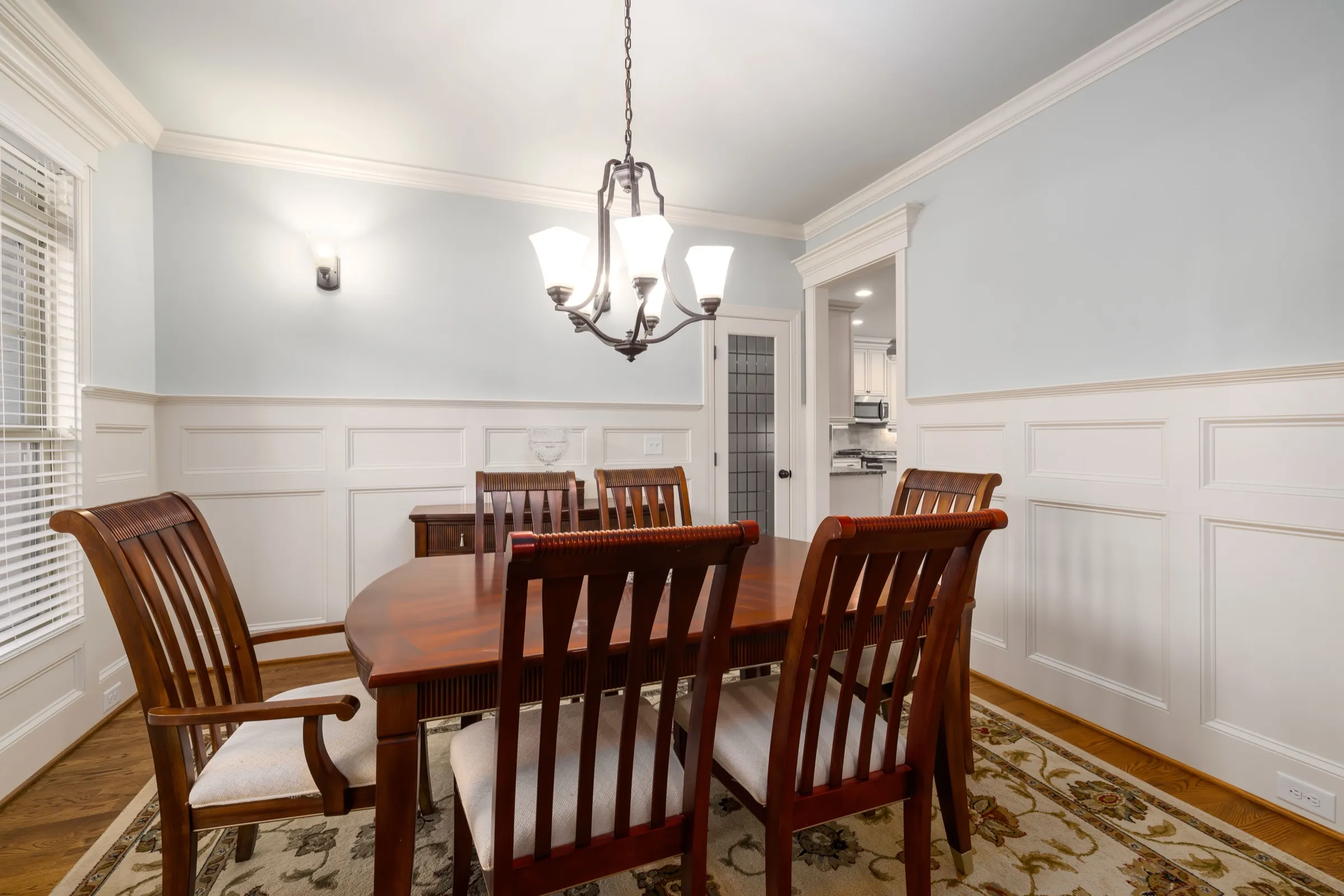
This room takes the opposite approach on both counts. The panel detail is a single row of flat panels in a thinner frame, simpler than the layered moulding above, and the wall color is a deep gray instead of a pale one. Simpler profiles and bolder colors tend to move together: a heavily layered panel wants a quiet wall to let the trim carry the room, while a flatter profile can handle a stronger color without getting busy. Change either variable and the room’s register shifts with it.
Beyond the dining room
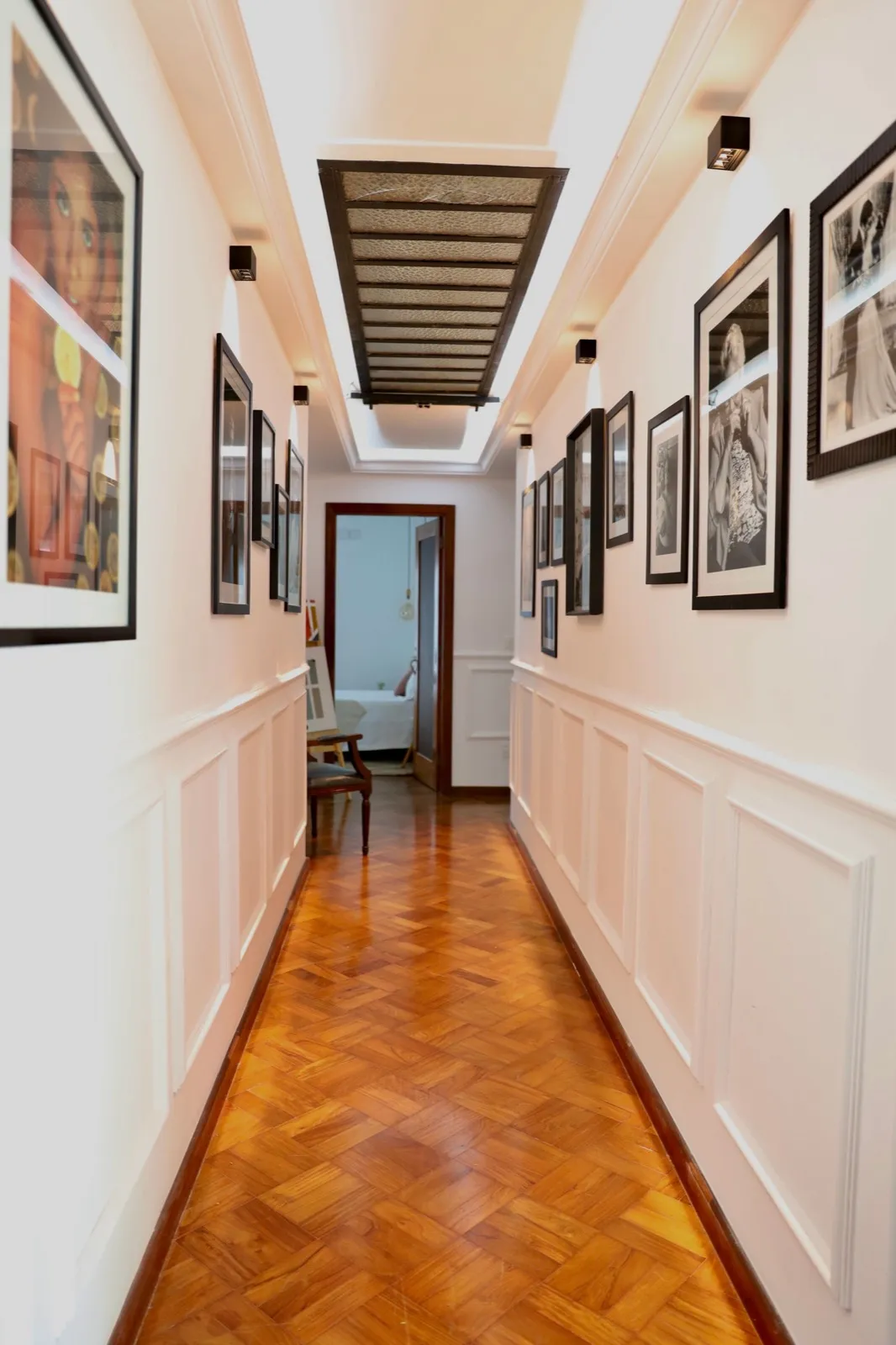
Wainscoting doesn’t have to stop at the dining room door. This hallway uses a similarly simple, single-row panel, run the full length of the corridor. It does two things at once: it protects the wall from everyday wear in a high-traffic space, and it gives a long, plain hallway some architectural interest, especially useful as a backdrop for a gallery wall.
Wrapping a corner
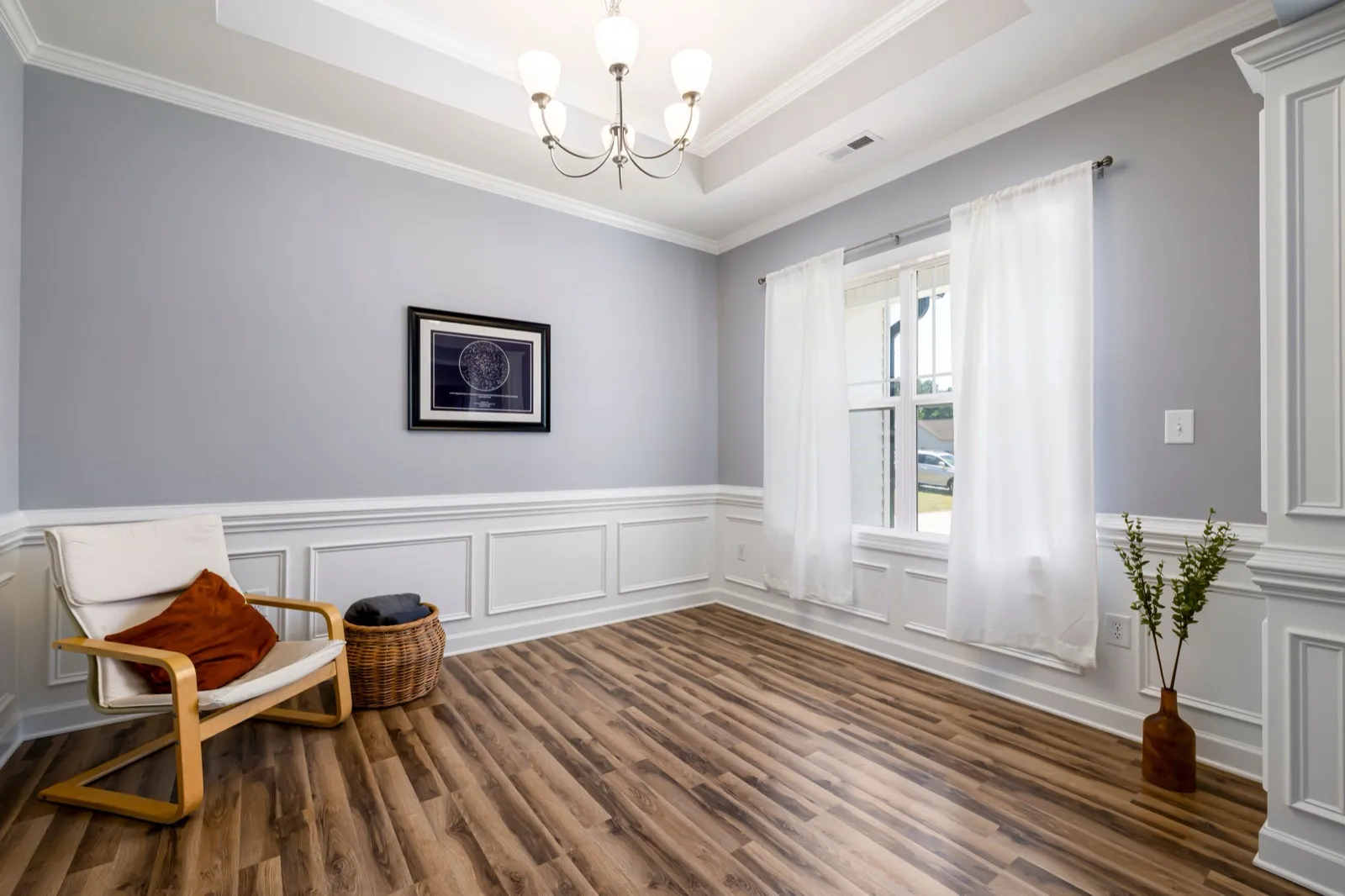
Wainscoting doesn’t have to stay a horizontal band. Take the same panel moulding and run it floor to ceiling around a corner or doorway, and it turns into a pilaster, a detail that reads more like a piece of architecture than a wall treatment. It’s a heavier move than a standard wainscoting run, so it works best used once in a room, framing an opening, a fireplace, or a transition into the next space, rather than repeated on every wall.
The decision that actually matters
Panel complexity, wall color, and placement all move together. Before picking a profile, decide how formal you want the room to read, and let that answer guide everything else: a simpler moulding and a bolder color for a casual room, a more layered profile and a quieter wall for a formal one, and whether the paneling stays a horizontal band or does more, like carrying up a corner as a pilaster.
If you’re planning wainscoting or other custom trim work for a home in Naperville or DuPage County, get in touch and we’ll walk through what fits the room.